A North Indian Guide to Transitioning to a Genuine Organic Lifestyle
For families across the Chandigarh Tricity and Delhi NCR, transitioning to an organic lifestyle is no longer an aesthetic dietary trend; it is a preventative health necessity. However, protecting your household from agricultural toxins does not require an immediate, overwhelming overhaul of your entire kitchen. True physiological protection is built through strategic, incremental substitutions of your primary daily dietary anchors.
The Systemic Toxin Reality in Regional Agriculture
To understand the necessity of chemical-free sustenance, one must examine standard commercial harvesting mechanics in Northern India. Commercial grain operations routinely face tight crop rotation windows between paddy harvesting and winter wheat sowing. To accelerate harvest timelines, industrial farms routinely deploy two dangerous agricultural shortcuts:
- Chemical Desiccation: Systemic herbicides like Glyphosate are routinely sprayed directly onto standing commercial wheat crops days prior to harvest to artificially kill the plant and force uniform grain drying. This raw herbicide absorbs directly into the edible grain endosperm.
- Synthetic Nitrate Overload: Excessive Di-ammonium Phosphate (DAP) and synthetic urea dumping force rapid, watery cellular plant expansion. While this increases gross harvest bag weight, it drastically dilutes natural micronutrient density and leaves crops highly susceptible to secondary fungal contamination.
Step 1: Secure Your Primary Caloric Anchors
Many urban consumers make the error of spending their organic budget on exotic imported vegetables while continuing to consume chemically desiccated commercial wheat flour (Atta) and polished rice twice daily. In a standard North Indian household, grains represent roughly 60% of total daily caloric intake. You achieve maximum preventative health impact by replacing your high-volume staples first:
- Unbleached Sharbati Wheat: Procure whole wheat grown on biologically remediated soil that utilizes zero pre-harvest desiccant sprays.
- Aged Basmati 1718: Select traditional long-grain rice cultivated without synthetic carbofuran insecticides.
Institutional Insight: You cannot wash systemic agricultural chemicals off commercial produce. While soaking vegetables in salt water removes superficial dust and contact sprays, systemic pesticides are biologically integrated into the cellular walls of the crop during its active growth cycle.
Step 2: Demand NABL Heavy-Metal Verification
Unregulated marketing terms such as "natural," "farm-fresh," and "traditional" carry zero legal accountability. True agricultural authority is strictly binary: it is either verified by mass-spectrometry laboratory scanning, or it is a speculative marketing claim.
When selecting a direct-to-consumer farm estate, demand explicit visibility into their independent laboratory Certificates of Analysis (COA). Safe agricultural produce must verify non-detectable thresholds for toxic subterranean heavy metals, specifically Lead (Pb), Cadmium (Cd), and Arsenic (As), cross-referenced against strict soil organic carbon metrics.
Step 3: Understand the Scarcity Principle
Genuine organic agricultural systems operate on biological time, not factory schedules. Because organic crops rely on microbial nutrient cycling rather than forced synthetic salt injections, per-acre yields are mathematically lower than industrial chemical farms. Consequently, authentic chemical-free produce cannot be mass-distributed through standard retail supermarket chains without compromising purity.
True organic living requires shifting from transactional grocery shopping to relationship-based estate allocation, securing your household's seasonal volume directly from the farmgate during active harvest windows.
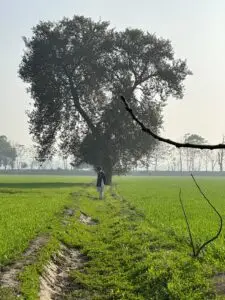
Secure Your Family's Annual Grain Vault
Our seasonal harvest of heritage Sharbati Wheat and chemical-free Basmati Rice is strictly capped at 10 quintals per crop. We dispatch directly from our Muktsar estate to private residences across Chandigarh Tricity and Delhi NCR.
Claim Your Allocation via WhatsApp